
Morning All,
The weather has been tracking in the right direction in the past 2 weeks and the 7-dayforecast for all regions is for this weather to continue.
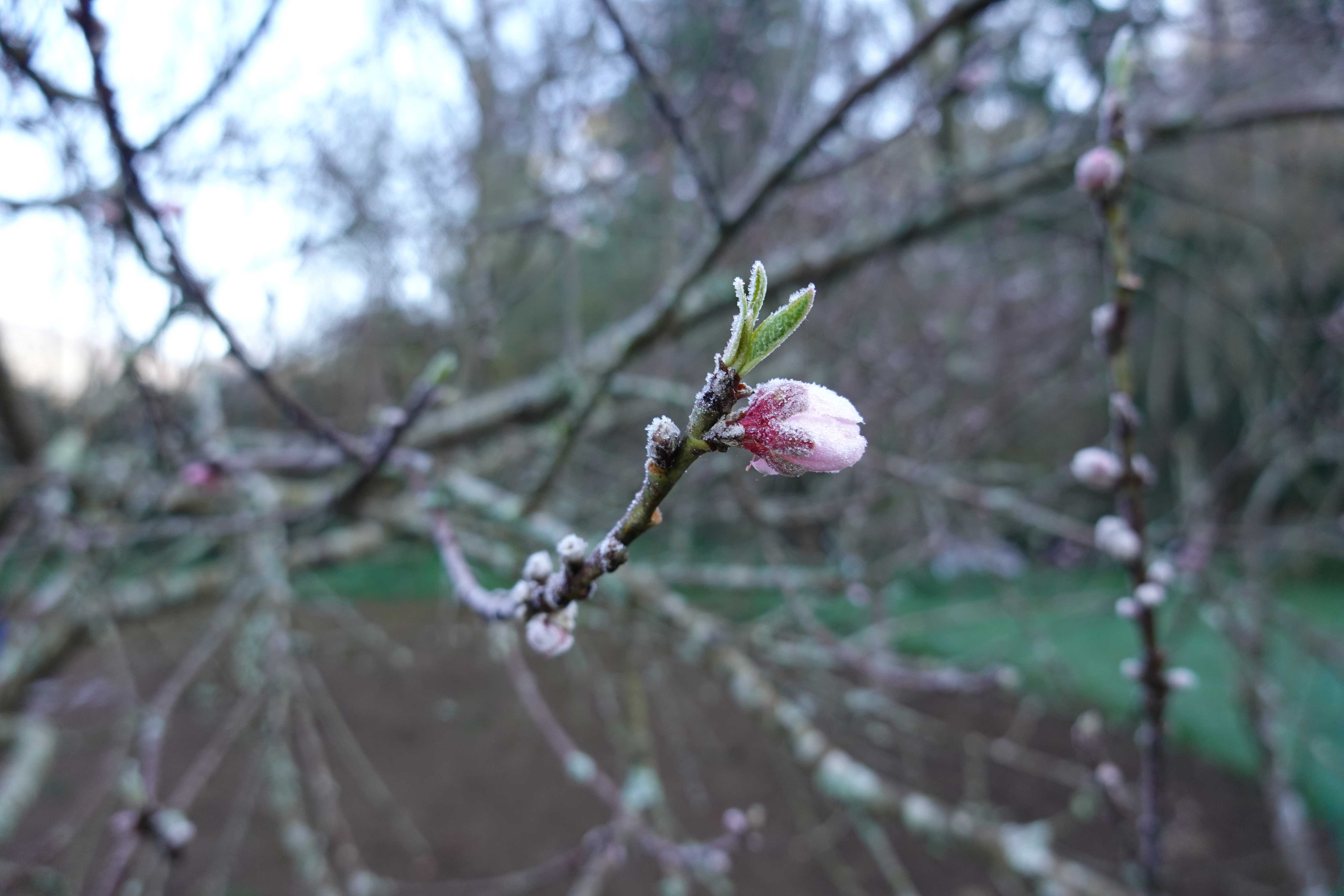
Phenology-wise, buds are generally more advanced than in previous seasons and I saw my first almond blossom on the weekend (end of the row, east-facing side, where the most heat would be accumulated). Peaches well into woolly bud and was in discussion with table grape growers over the weekend as to the time of applying Dormex. Table grapes are low chill lines, but there is still insufficient chill to warrant an application this early. I am leaning towards mid next week in the table grape industry to be the earliest application of dormancy breakers.
If looking at recent history, we are still tracking significantly below previous years. On current tracking and assuming weather remains cool, almonds should have sufficient chill in 10-14 days’ time in the Riverland, 14-20 days in Griffith. Sunraysia is more difficult to estimate due to the north-south distribution of almonds in the region, but somewhere between the Riverland and Griffith.
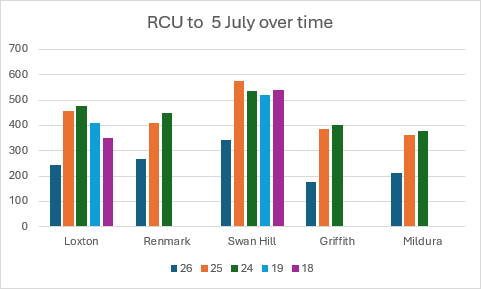
I have included the RCU requirements for common almond varieties as a useful reference. Drawing a line across the graph may help identify potential considerations for spray timing and cross-pollination.
Specific Richardson/Utah CU requirements for common almond varieties include:
- Nonpareil: ~250 - 360 CU
- Ferragnès: ~260 - 440 CU
- Desmayo Largueta: ~220 - 280 CU
- Mission (Texas): ~400 CU
- Carmel: ~400 - 500 CU
- Independence: ~400 - 500CU
- Fritz: ~500 CU
- Butte: ~500 - 600 CU [1 , 2]
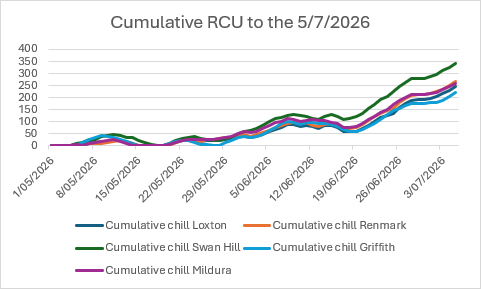
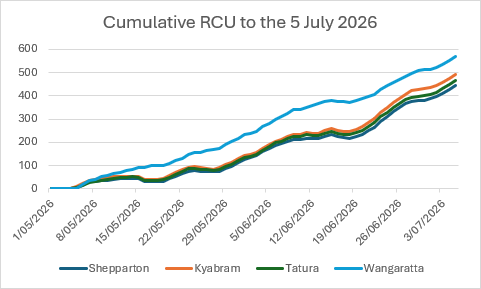
For the Goulburn Valley with a higher run of higher chill varieties, we can still see large varietal differences across the fruit tree groupings. One of the issues with the lower chill lines in the Goulburn Valley is the cool and frosty conditions that can exist well into September, making low chill varieties particularly vulnerable to frost damage and crop losses.
- Apples: Low chill (300–400units), such as Anna and Pink Lady. High chill (800+ units), such as Fuji and Granny Smith.
- Peaches & Nectarines: Low chill (250–500 units), such as Flordaprince and Tuscany. High chill (600–900 units), such as Golden Queen.
- Pears: Typically require400–900+ units, depending on the variety.
- Plums: Low/Medium chill(300–500 units) for Japanese plums; High chill (700–900 units) for European types.
- Cherries: Low chill (250units) like Minnie Royal. High chill (800–1,000 units) for varieties like Stella or Bing
-
Regards,
Shane Phillips | Head Chemist - Research & Development
E: shane.phillips@biocentral-labs.com
Stay connected and receive updates, resources and insights—subscribe to our newsletter today.
References:
[1] Drake, C. A., & Clark, J. R. (2000). Determination of chilling requirement of Arkansas thornless blackberry cultivars. Discovery: The Student Journal of Dale Bumpers College of Agricultural, Food and Life Sciences, 1, Article 6.
[2] Ramírez, L., Sagredo, K., & Reginato, G. (2010). Prediction models for chilling and heat requirements to estimate full bloom of almond cultivars in the Central Valley of Chile. Acta Horticulturae, 872, 89–96. https://doi.org/10.17660/ActaHortic.2010.872.12


