
Morning All,
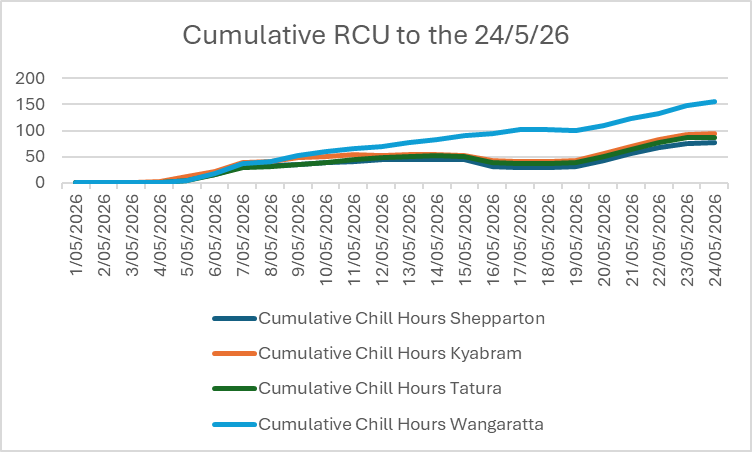
Last week I discussed the Richardson model and today we look at Chill Portions. What both models have in common is that they include loss of chills based on warm conditions during the dormancy period. I have added some clarifying comments to the A1 notes attached. What we are seeing at this early stage of the season is that we are travelling at very low chill accumulation based on long term records from several sources. All models and reporting agencies are reporting low chill accumulation. Trees that are holding leaves late will have a shortened period to accumulate the adequate hours required for bud viability during the flowering period. Next week I will include some data from the early 2000’s which will highlight the significance of measuring chill regarding the seasonal timing of dormancy breakers in orchard management.
The Met Bureau has forecast warmer than average temperatures for the 2026 winter. While the season has a long time to play out those considering the using of cooling polymers to enhance chill or manage varietal variance should make this considerations earlier rather than later to enable adequate chill to be acquired.

Temperature forecasts for the next 7 days indicate that reasonable chill accumulation should be obtained in all monitored regions.
Looking at the Goulburn Valley, it is easy to see why it has been favoured for growing pome fruit and the Warby Ranges for cherry growing as it accumulates excellent early season chill hours.
Measurement using Chill Portions
• Chill Portions: Measures chill using a dynamic, biological model that evaluates varying effectiveness of different temperatures, and self-corrects by subtracting portions if winter days get too warm.
Typical Fruit Requirements (Portions)
While requirements vary by variety, general tree groupings measured in chill portions include:
• Low Chill (<40 Portions): Suitable for mild climates (e.g., some peaches, nectarines, almonds and plums).
• Medium Chill (40-70 Portions): Standard for temperate zones (e.g., Lapins cherries at ~35, Flavortop nectarines at ~41, Golden Delicious apples at ~50).
• High Chill (>70 Portions): Requires very cold, sustained winters (e.g., specific apples and pears, some peach varieties, pistachios)
Why Chill Hours Matter
During winter, fruit trees enter a resting state. They act as an inbuilt recorder to gauge when winter is safely over. If a tree does not receive enough cold weather to break this dormancy, it will suffer from delayed budburst, poor flowering, and weak fruit set. Trees that have inadequate chill will often have misshaped fruit and poor fruit flavours. Nut crops will often have a higher level of blanks in shell or deformed nuts in the hull.
General Chill Requirements by Tree Type
Every fruit tree variety has a specific chilling requirement, which generally falls into one of three categories:
• Low Chill (400hours): Best for warmer, temperate, or subtropical climates. Examples: Peaches, nectarines, figs, and some apples (like Anna or Dorset Golden). Pomegranates are low chill plants as are table grapes. Almonds straddle between low to medium chill requirements which means in cross pollinated varieties the lower chill lines may not necessarily overlap in flowering with the main variety Non Pareil.
• Medium Chill (400 – 700): Suitable for mild to cool temperate regions. Examples: Plums, Asian pears, and some apples. Almonds range from the 350-500 RCU.
• High Chill (700-1,200): Require cold winters. Examples: Cherries, pears, and many apple varieties (like Granny Smith or Pink Lady). Jazz is an apple variety that requires high chill conditions to set crop.
Regards,
Shane Phillips | Head Chemist - Research & Development
E: shane.phillips@biocentral-labs.com
Stay connected and receive updates, resources and insights—subscribe to our newsletter today.


